

SSTV from ISS – World Space Week 2025

Slow Scan TV, or SSTV is a digital mode available to amateur radio operators which has been around way before FT8 and other digital modes.
This mode is unique as it is used to transmit pictures, either monochrome or most commonly, in full color. This mode requires no more than a single voice channel of bandwidth (no more than 3khz) and a minute or two per picture (more or less depending on the mode being used).
Since SSTV can be transmitted over any phone transmission mode, it can be transmitted in FM or SSB and on any band with phone mode privileges.
There are many software packages available for both reception and transmission of SSTV. Setup can be as simple as plugging in a modern HF or VHF transceiver with a sound card interface to a computer. Or, it can be received with a scanner or shortwave receiver playing near a microphone input to a computer running the SSTV software.
World Space Week 2025
On occasion, the ISS transmits SSTV for special events. ARISS commemorated the 68th anniversary of the launch of the world’s first satellite – Sputnik-1 – by transmitting a series of space cooperation-themed SSTV images from the International Space Station (ISS) from October 3 until October 9th.
The images were transmitted on the 2-meter band, on the ISS downlink frequency of 145.800 MHz.
During the last SSTV event, I posted about my experience receiving the images with a standard vertical antenna which was not optimal.
Below is a video of suboptimal reception using a Comet CX-333 vertical:
This time around, the weather in the northeast in early October was summer-like, and I was able to get outside with the Arrow hand-held beam antenna.
The images received this time were far clearer and more complete, which would be expected. I used the Arrow antenna, the GoSatWatch app, and my Yaesu FT5D handheld. I used the FT5D because it has a feature to record received audio to an SD card. I then played back the recordings into virtual audio cable, and connected Yoniq SSTV app to virtual audio cable.
The video below demonstrates the improved reception and picture quality using the beam antenna outdoors:
I attached a copy of my recorded audio file from the FT5D for the image above. This can be played back into virtual audio cable and into MMSSTV as a test.
Although I was not able to pull down all 12 images transmitted from the ISS, I was able to capture a most of them.
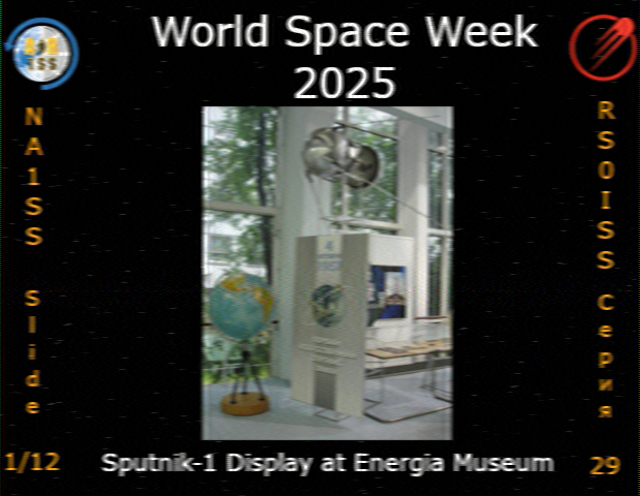
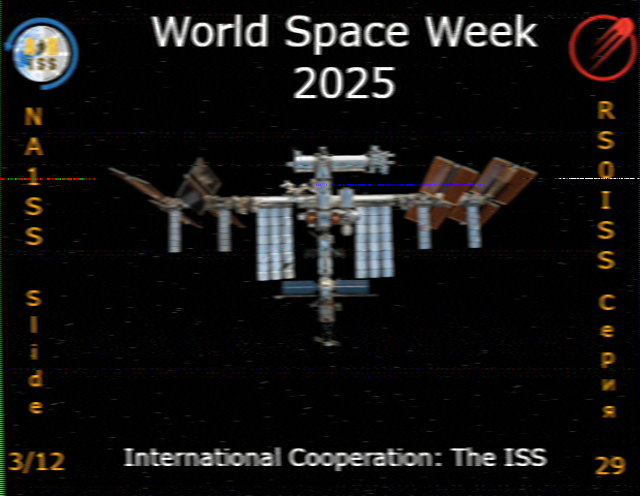
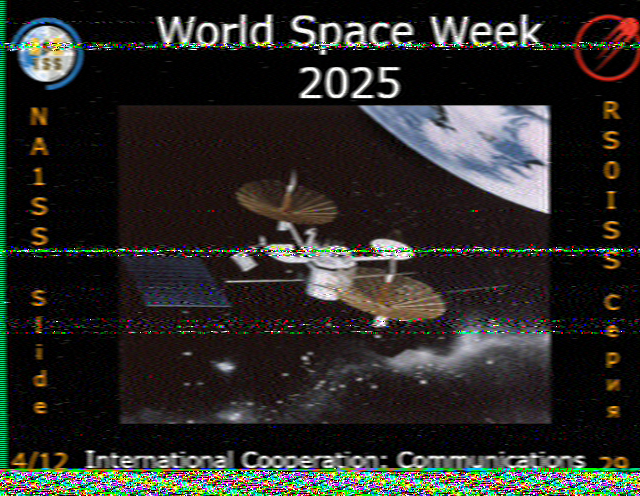
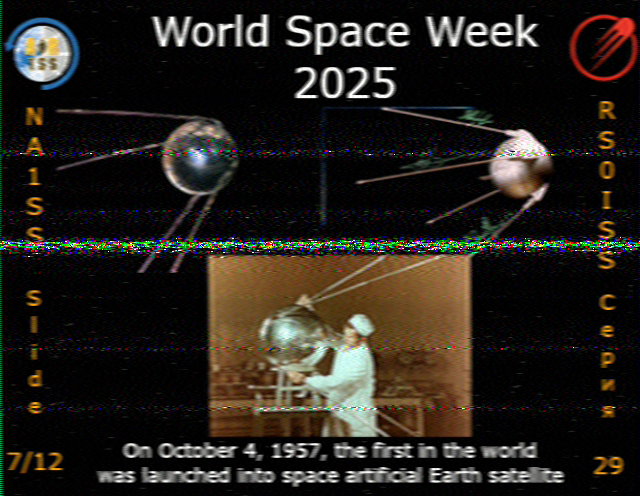
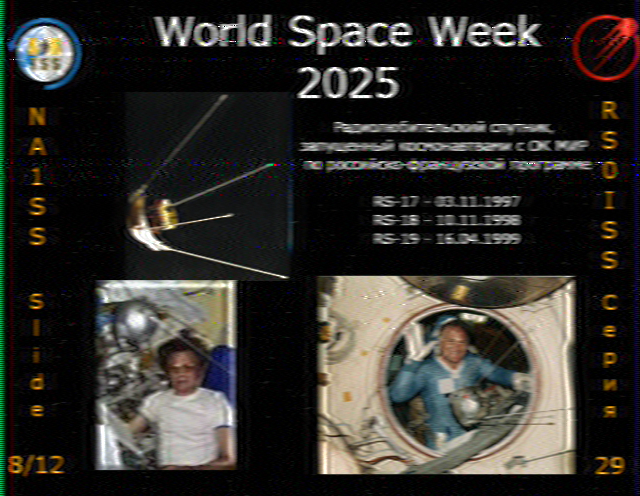
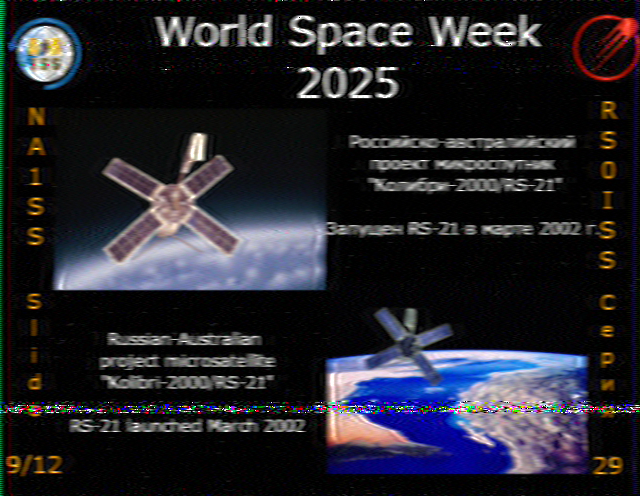
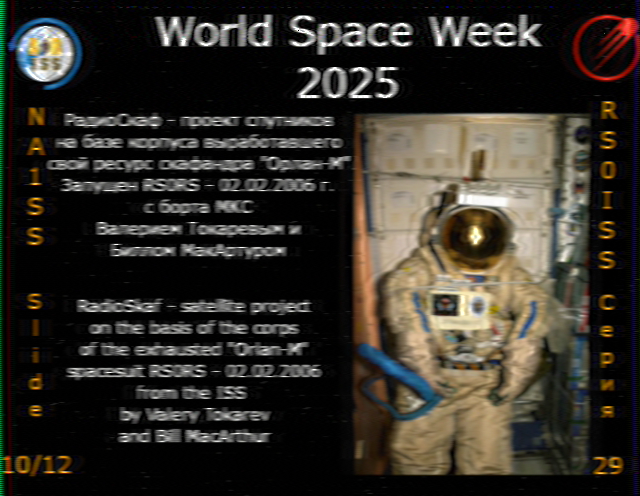
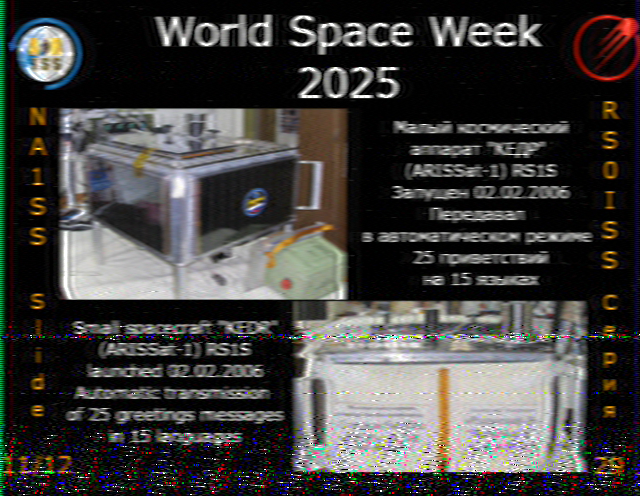
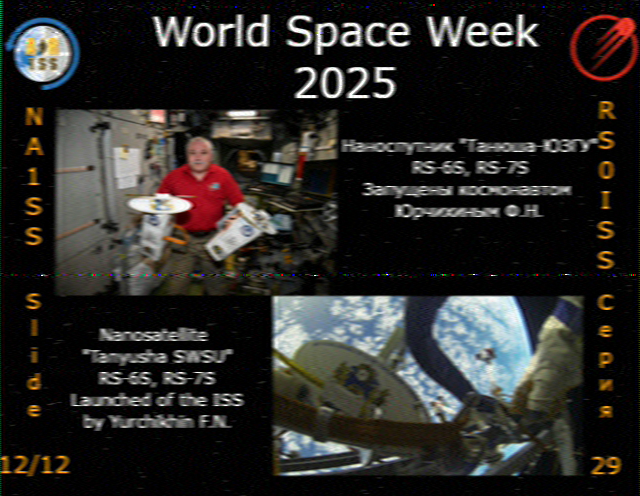
The received images shared by enthusiasts from around the world can be seen here.
The copy for each image was far better this time around compared to the last event.
On October 6, for the 8:55 AM pass, SSTV was paused for a Q&A with a school. Since I was prepared to record the SSTV audio on this pass, instead I recorded the Q&A downlink which was on the same frequency 145.800 MHz:
Optimal Passes
On a few passes where the angle of the pass was high enough, I could capture two full SSTV broadcasts in a single pass of the ISS. In a few instances, I almost captured three full images.
The most ideal pass would be 90 degrees above the horizon . The image below from the GoSatWatch app is an example of a near perfect pass of 87 degrees in my location on October 7, 2025 at 4:11 PM EST:
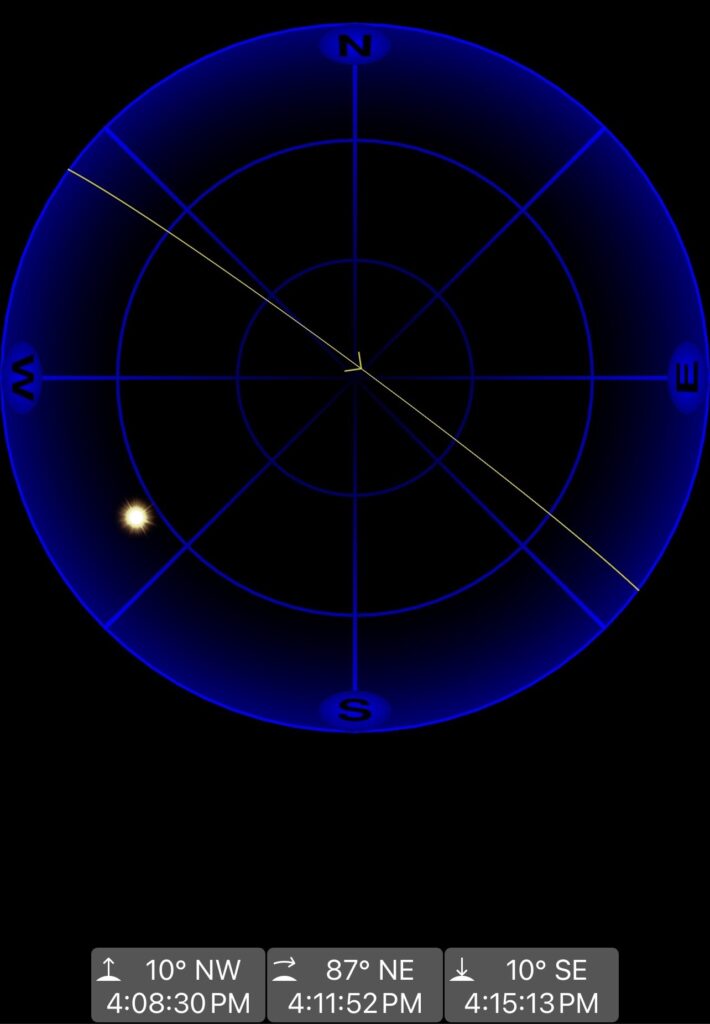
Due to the many hills, houses, and buildings around my area, the higher up above the horizon the better.
Assuming completely flat elevated land, it is possible to hear the ISS at an angle between 5 and 10 degrees in my experience. If we assume 10 degrees is the beginning of possible reception, then the total window of the pass is about 7 minutes.
SSTV Transmission Format and Timing
The ISS broadcasts SSTV in PD120 mode, which requires 2 minutes for each image. The ISS broadcasts each image with a 2 minute break in between. This means that at best, I would receive 2 full images with each full optimal pass. This also assumes the image transmission starts after the ISS is within my view, and not beforehand.
In my location, I have a few opportunities each day for an ISS pass:
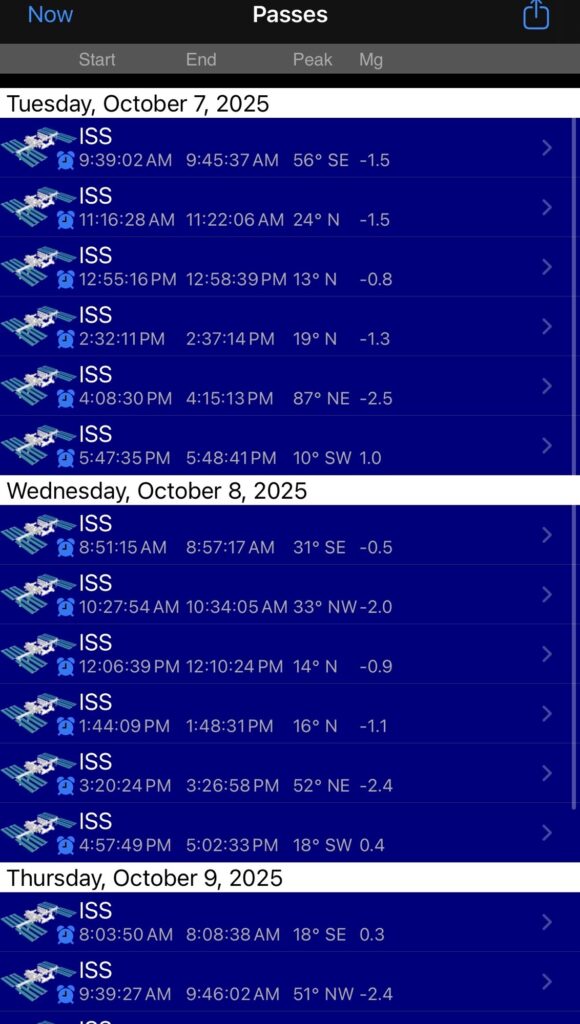
Of these passes, usually one or two has a 50 degree or higher pass. None of the passes occur early morning, at night, nor overnight.
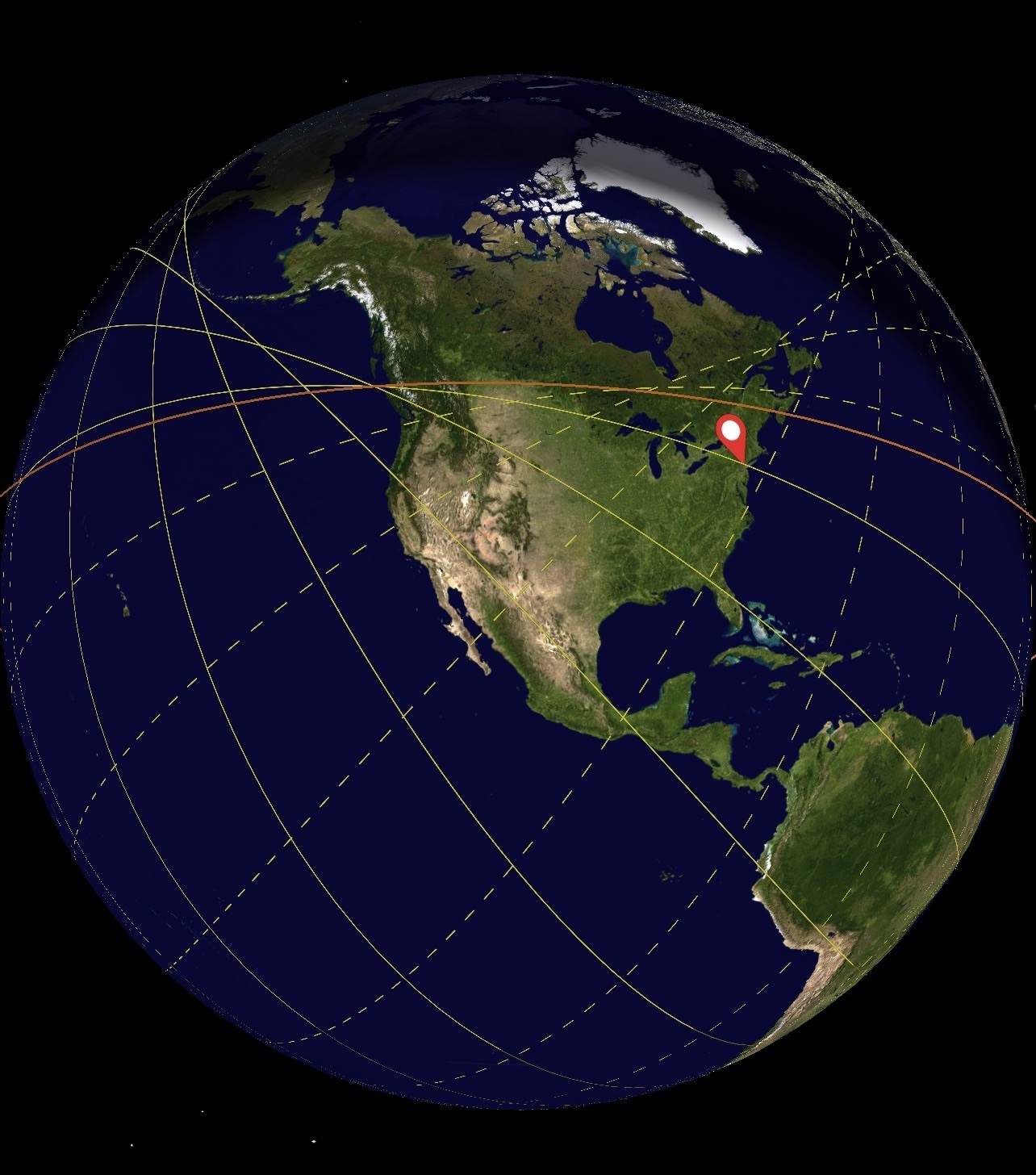
The orbit of ISS is such that it does not seem to pass over my location at night:
Capture Failures
On one occasion, the recording feature on the FT5D had stopped, I did not notice this, and realized I had not captured two full SSTV broadcasts. It was an unfortunate circumstance, but I found the cause was due to an SD card issue. I must have not ejected the device from my windows PC before physically removing it.
For each pass, I would move the SD card between my PC and the FT5D handheld.
I ended up recording on my Apple Watch as a backup, just in case a perfect pass is missed again due to an SD card issue.
On one particular morning, there was some rain for a few passes. Luckily the FT5D is somewhat water resistant, so I did not have to worry about the rain damaging it.
Another challenge is that I live very close to an international airport near NYC. Many passes had some reduced signal strength due to airplanes passing within my view of the ISS or causing some reflection or multipath of the signal.
ARISS SSTV Award
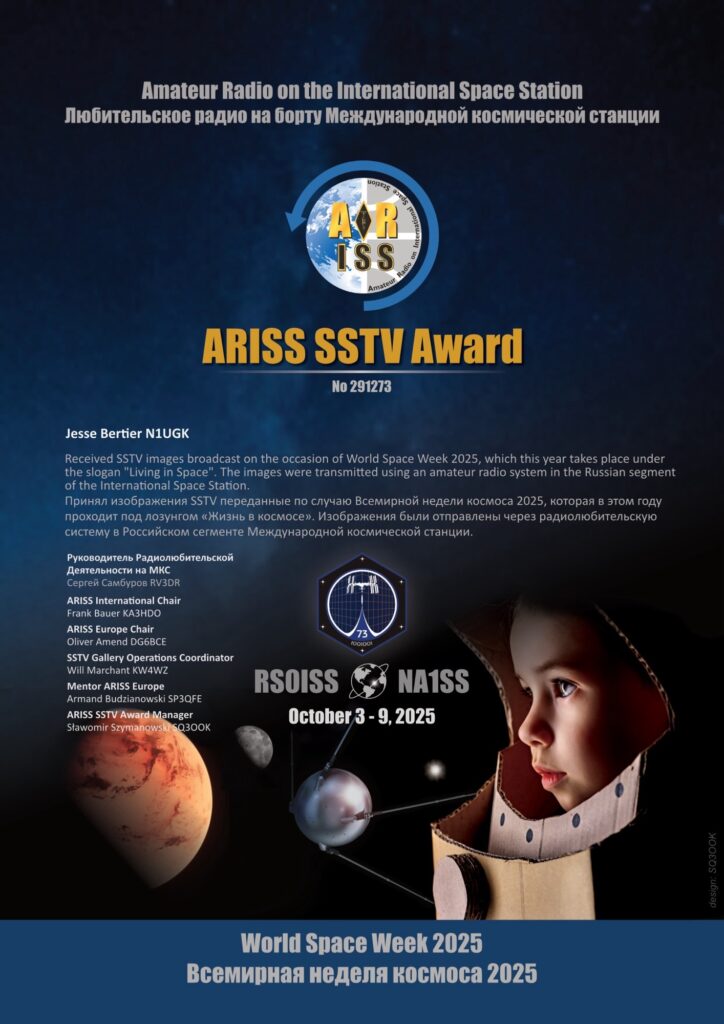
After submitting a few images to the ARISS reception site, I was emailed an award a few days later:
Final Thoughts
I was glad to be able to receive better copies of the images during this most recent event. Using a vertical or discone antenna in my location does not provide a strong enough signal for a clear picture copy from the ISS.
This time around, I used the Arrow portable satellite antenna and went outside for each pass, pointing the antenna in the direction of the ISS as it went by.
This extra effort certainly paid off and the result was I was able to pull down 10 of the 12 images in decent quality.
I am looking forward to the next event and will try again to capture each of the various images sent from the ISS.
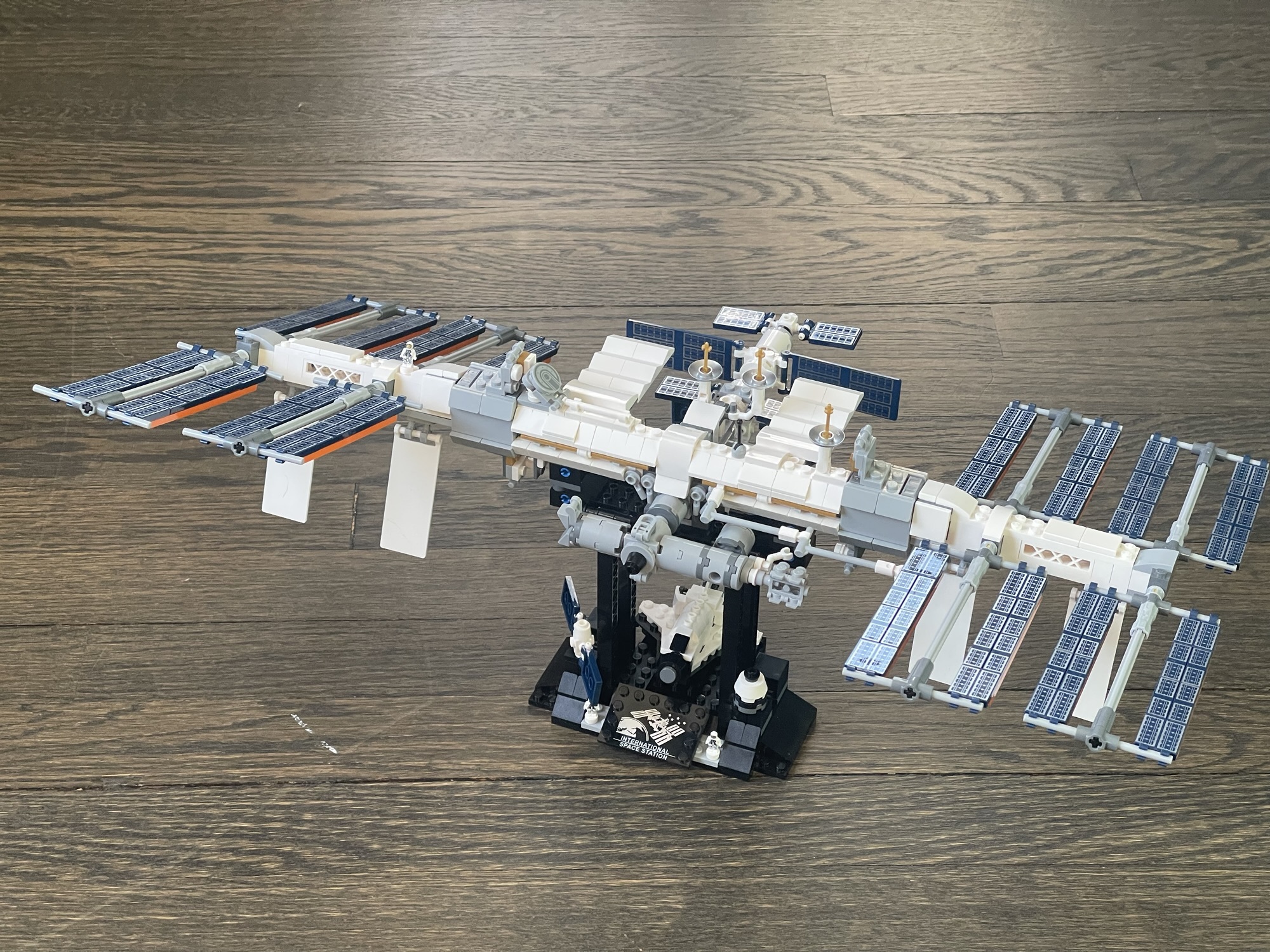
After posting this article, my son (age 6) put together the ISS Lego kit. This put some perspective on his experience hearing the images sent over the air as I was capturing them.